Chiapas
OpenRoom put together a mini guide of things you might want to know before your trip to Chiapas! Nevertheless, don't forget to scroll down to the comments to see tips & tricks from travelers who've been there!
SAN CRISTÓBAL DE LAS CASAS
📍 Where to find activities
→ Centro Histórico — Colonial cobblestone streets, pastel-colored buildings, churches, and plazas at 2,200m altitude. The entire historic center is walkable.
→ Plaza 31 de Marzo — The main square, surrounded by the Cathedral, the Palacio Municipal, and cafés under the arcades (Los Portales).
→ Calle Real de Guadalupe — The main pedestrian street. Cafés, restaurants, bars, shops, and the backpacker/digital nomad heart of the city.
→ Templo y Ex-Convento de Santo Domingo — A 16th-century church with an ornate pink baroque facade. The Mercado de Artesanías (handicraft market) operates daily right next to it—one of the best artisan markets in Mexico. Handmade textiles, amber jewelry, leather, and Mayan crafts.
→ San Juan Chamula — An autonomous Tzotzil Maya community about 20 minutes from San Cristóbal. The church of San Juan Chamula is famous for its syncretic religious practices blending Catholic and pre-Hispanic Maya traditions. Photography is strictly prohibited inside the church.
→ Zinacantán — Another Tzotzil community near Chamula, known for flower cultivation and textile weaving.
→ Cañón del Sumidero — A massive canyon with walls up to 1,000 meters high, about 1.5 hours from San Cristóbal (near Tuxtla Gutiérrez). Boat tours through the canyon on the Grijalva River. Crocodiles, monkeys, and bird species along the route.
→ Coffee and cacao — Chiapas produces more coffee than any other state in Mexico. San Cristóbal is full of specialty coffee shops and cacao/chocolate workshops.
📍 Where to eat
→ Real de Guadalupe and surrounding streets — International and traditional Chiapaneco food. The city has a surprisingly strong food scene for its size—from street tamales to farm-to-table restaurants.
→ Mercado Municipal — The main food market for local produce, chiles, tortillas, and prepared food.
📍 Where to go out
→ Real de Guadalupe and side streets — Mezcalerías, wine bars, live music venues, and cantinas. The nightlife is bohemian and conversational—live trova, jazz, and DJ sets in small bars. Not a club scene.
→ Pox (posh)—A traditional Mayan ceremonial spirit made from corn, sugarcane, and wheat. Several bars in San Cristóbal serve pox cocktails.
📍 Where to find culture
→ Na Bolom Cultural Museum — A museum and cultural center dedicated to the Lacandón Maya people, founded by anthropologist Gertrude Duby and archaeologist Frans Blom.
→ Centro de Textiles del Mundo Maya — A museum showcasing about 500 pieces of Mayan textiles from across the region.
→ Museo del Ámbar — Amber museum. Chiapas has been producing amber since pre-Hispanic times.
→ Street art — Especially in the El Cerrillo neighborhood. Murals depicting indigenous struggles, Zapatista history, and Chiapaneco identity.
→ Iglesia de Guadalupe and Iglesia del Cerrito—Two hilltop churches on opposite ends of town with views over San Cristóbal and the surrounding mountains.
📍 Nearby destinations
→ San Juan Chamula (20 min), Zinacantán (30 min), Cañón del Sumidero (1.5 hrs via Tuxtla), Palenque (5 hrs), Cascadas de Agua Azul (4 hrs), Lagos de Montebello (3 hrs)
📍 Nearby destinations (secondary)
Palenque
→ One of the most important Mayan archaeological sites in Mexico, located in the jungle lowlands of northern Chiapas. The Temple of the Inscriptions, the Palace, and the tomb of the ruler K'inich Janaab Pakal. The jungle setting — with howler monkeys and tropical birds in the canopy — makes Palenque unlike any other ruin site in the Yucatán region.
→ About 5 hours from San Cristóbal by road. Many travelers do the route San Cristóbal → Agua Azul → Misol-Ha → Palenque in a single long day trip.
Cascadas de Agua Azul
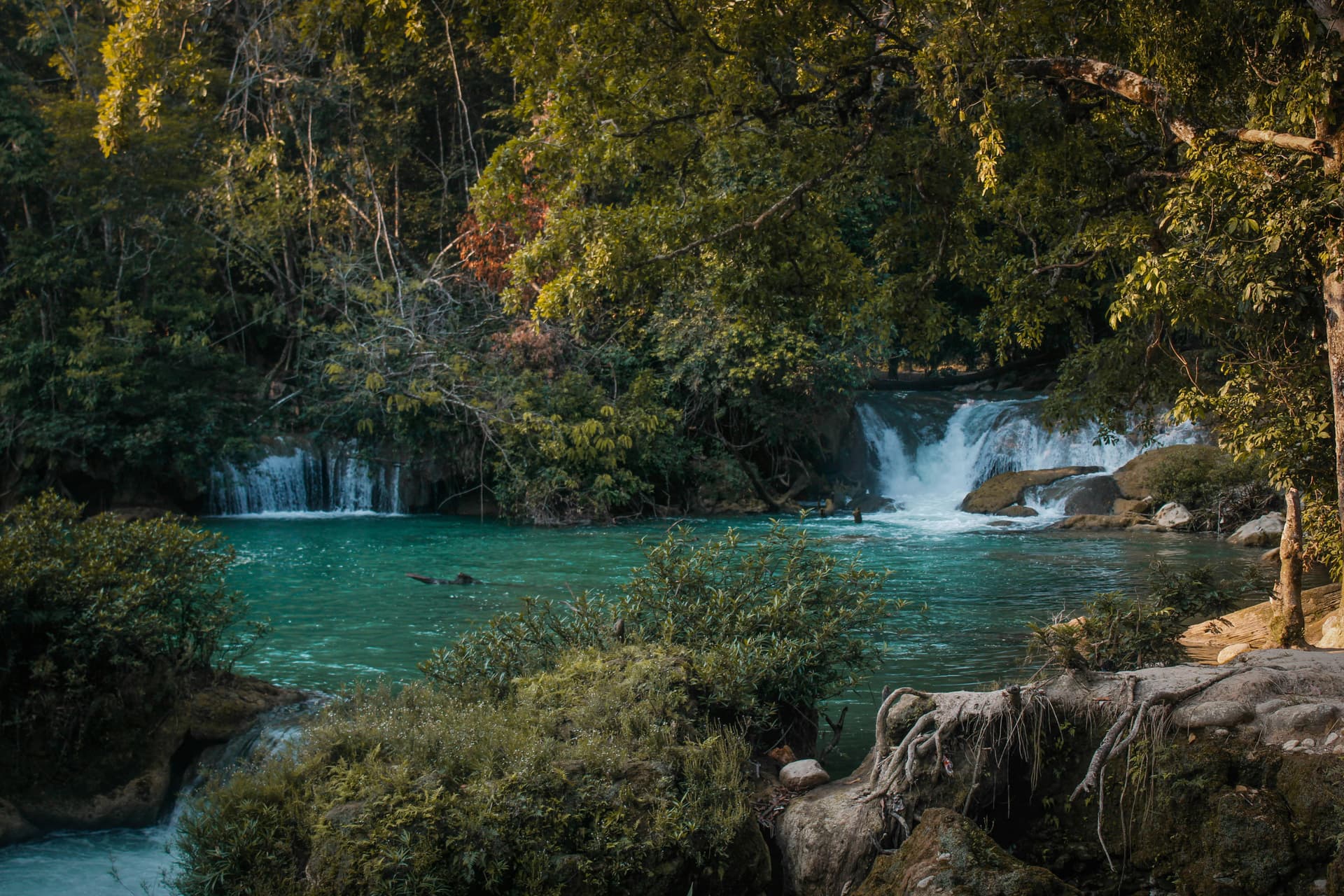
→ A series of turquoise-blue cascading waterfalls and natural pools in the jungle, about 4 hours from San Cristóbal on the road to Palenque. Swimming is possible in some of the pools depending on the season and water levels.
Cascada de Misol-Ha
→ A single 35-meter waterfall dropping into a pool surrounded by jungle. A path leads behind the waterfall. About 30 minutes from Palenque.
Lagos de Montebello
→ A chain of over 50 lakes with different colors (blue, green, turquoise, violet) in the forest near the Guatemala border. About 3 hours from San Cristóbal.
📍 Climate by season
San Cristóbal sits at 2,200 m altitude and has a cool highland climate—significantly cooler than the rest of southern Mexico.
Dry season (November–April) — Highs around 20–24°C (68–75°F). Lows around 4–10°C (39–50°F). Cold mornings and nights, especially December–February. Sunny days. Bring warm layers.
Rainy season (May–October) — Highs around 20–22°C (68–72°F). Lows around 10–13°C (50–55°F). Afternoon and evening rains, sometimes heavy. Fog and overcast mornings.
Palenque and the lowlands have a completely different climate — hot and humid year-round. Highs around 30–35°C (86–95°F). Very humid with rain throughout the rainy season.
📍 Areas that may not be safe
Based on news reports and online sources, these are the areas that may not be safe:
Highways in Chiapas—road blockades (bloqueos) by various groups are common and can occur without warning, particularly on the route between San Cristóbal and Palenque and between San Cristóbal and Comitán/Montebello.
The Guatemala border region—municipalities near the border.
Some rural areas of the Chiapas highlands outside San Cristóbal.
(Picture credit: Evelin Peralta)
Comments
0 commentsJoin the conversation and share your perspective.