Guanajuato

OpenRoom put together a mini guide of things you might want to know before your trip to Guanajuato! Nevertheless, don't forget to scroll down to the comments to see tips & tricks from travelers who've been there!
GUANAJUATO CAPITAL
📍 Where to find activities
→ Jardín de la Unión — The main triangular plaza, shaded by Indian laurel trees. Restaurants, cafés, live music, and the departure point for callejoneadas every evening. The social heart of the city.
→ Callejoneadas — Guanajuato's signature tradition. Groups of students dressed in Renaissance Spanish costumes (capes, plumed hats) lead walking parades through narrow alleys, singing, playing guitars, and telling legends and jokes. Shows run nightly, last about 1.5 hours, and include a small bottle of wine or mezcal.
→ Callejón del Beso (Alley of the Kiss) — A narrow alleyway where two opposing balconies are close enough to kiss across. Named after a local love legend. One of the most photographed spots in the city.
→ Underground tunnels — About 10 km of subterranean roads running beneath the city center, originally built to divert the Guanajuato River and prevent flooding. Now used for vehicular traffic. Pedestrian-accessible in some sections.
→ Monumento al Pípila — A hilltop statue overlooking the entire city. Accessible by funicular or a steep walk. The best panoramic view of Guanajuato's colorful hillside buildings, especially at sunset.
→ Teatro Juárez — A grand neoclassical theater inaugurated in 1903 by President Porfirio Díaz. Hosts concerts and performances, and live music often happens on its steps in the evenings.
→ Museo de las Momias — A museum displaying naturally mummified bodies discovered in Guanajuato's cemetery. Unique and somewhat macabre.
→ Museo Casa Diego Rivera — The birthplace of muralist Diego Rivera, now a museum with some of his early works.
→ Mina de Valenciana and Templo de San Cayetano — A historic silver mine and an ornate baroque church on the hillside above the city, built with mining wealth.
→ Festival Internacional Cervantino — One of the most important performing arts festivals in Latin America, held every October. Music, theater, dance, and art from around the world take over the city for several weeks.
📍 Where to eat
→ Jardín de la Unión and surrounding streets — Restaurants and cafés under the arcades and along Calle Sopeña.
→ Mercado Hidalgo — A large covered market with food stalls, produce, and handicrafts under an iron-and-glass dome.
→ Plaza de la Paz — Quieter dining near the Basílica.
📍 Where to go out
→ Guanajuato is a university town with about 40,000 students, and the nightlife reflects it. Cantinas, bars, and live music venues around Jardín de la Unión and the side streets. Pub crawls through cantinas are popular.
→ The callejoneadas themselves are a form of nightlife — musical, social, and uniquely Guanajuato.
→ Plaza de los Ángeles — Fills up with performers and musicians at night.
📍 Where to find culture
→ Teatro Juárez — Concerts and performances.
→ Museo Casa Diego Rivera — Birthplace museum.
→ Basílica de Nuestra Señora de Guanajuato — Yellow baroque church on Plaza de la Paz housing a cedar-carved Virgin from the 16th century.
→ Universidad de Guanajuato — A 400-year-old institution with a distinctive white neoclassical building in the center. The university drives much of the city's cultural life.
→ Festival Internacional Cervantino (October).
📍 Nearby destinations
→ San Miguel de Allende (1.5 hrs), Dolores Hidalgo (1 hr), León (30 min)
SAN MIGUEL DE ALLENDE
📍 Where to find activities
→ Jardín Principal (El Jardín) — The main plaza, surrounded by restaurants, galleries, and shops. The gathering point of the town.
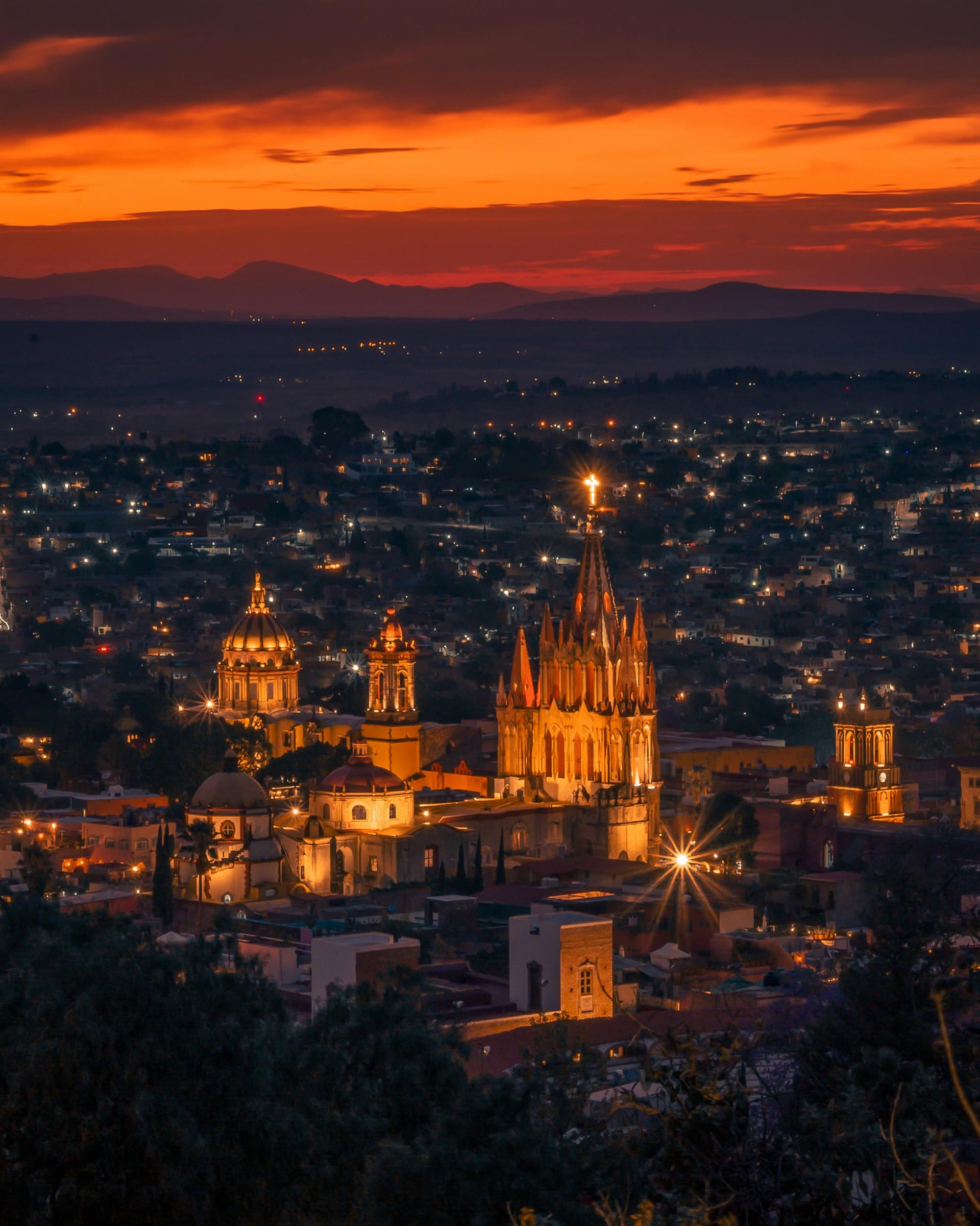
→ Parroquia de San Miguel Arcángel — The iconic pink neo-Gothic parish church with its towering spires. The most photographed building in San Miguel and visible from almost everywhere in town.
→ Art galleries — San Miguel has one of the highest concentrations of art galleries in Mexico. Contemporary, folk, and traditional art throughout the center.
→ Fábrica La Aurora — A former textile factory converted into an art and design center with galleries, antique shops, and studios.
→ Cañada de la Virgen — An archaeological site about 30 minutes outside town. A Mesoamerican pyramid complex in a desert landscape. Less visited than major ruins.
→ Hot springs (aguas termales) — Several natural hot springs in the area surrounding San Miguel, including La Gruta and Escondido Place.
→ Mirador — A viewpoint above the town with panoramic views of San Miguel and the surrounding valley.
📍 Where to eat
→ Around El Jardín and the surrounding cobblestone streets — A dense concentration of restaurants ranging from traditional Mexican to international fine dining. San Miguel has one of the strongest restaurant scenes in Mexico relative to its size.
→ Mercado de Artesanías — The artisan market with food stalls and local products.
📍 Where to go out
→ San Miguel has a modest but active bar scene. Rooftop bars with views of the Parroquia, mezcalerías, wine bars, and live music venues. The nightlife is more refined and conversational than party-oriented.
📍 Where to find culture
→ Parroquia de San Miguel Arcángel — The iconic church.
→ Instituto Allende — A historic art school in a former hacienda, offering courses in visual arts, Spanish language, and Mexican culture.
→ Fábrica La Aurora — Art galleries and design studios.
→ San Miguel has a large international expat community (particularly American and Canadian), which has shaped its restaurant, gallery, and cultural scene.
📍 Nearby destinations
→ Guanajuato capital (1.5 hrs), Dolores Hidalgo (45 min), Querétaro (1.5 hrs)
📍 Climate by season
Guanajuato state has a temperate highland climate. Both Guanajuato capital (2,000 m) and San Miguel de Allende (1,900 m) are at altitude.
Dry season (October–May) — Highs around 22–28°C (72–82°F). Lows around 6–12°C (43–54°F). Sunny days with cool to cold nights, especially November–February. The most pleasant months for visiting.
Rainy season (June–September) — Highs around 24–27°C (75–81°F). Lows around 12–15°C (54–59°F). Afternoon rains, sometimes heavy. Mornings are usually clear.
October — The Festival Cervantino month in Guanajuato capital. Expect crowds and higher prices but an incredible cultural atmosphere.
📍 Areas that may not be safe
Based on news reports and online sources, these are the areas that may not be safe:
Areas of Guanajuato state outside the main tourist cities—the state has reported high homicide rates in recent years, concentrated in municipalities like Celaya, Irapuato, Salamanca, and León, linked to cartel activity.
(Picture credit: Famitsay Tamayo)
Comments
0 commentsJoin the conversation and share your perspective.