Puebla
OpenRoom put together a mini guide of things you might want to know before your trip to Puebla! Nevertheless, don't forget to scroll down to the comments to see tips & tricks from travelers who've been there!
PUEBLA
📍 Where to find activities
→ Zócalo de Puebla — The main square, surrounded by colonial buildings, restaurants, cafés, and street performers. The San Miguel Arcángel fountain sits at its center. Lively day and night, especially on weekends.
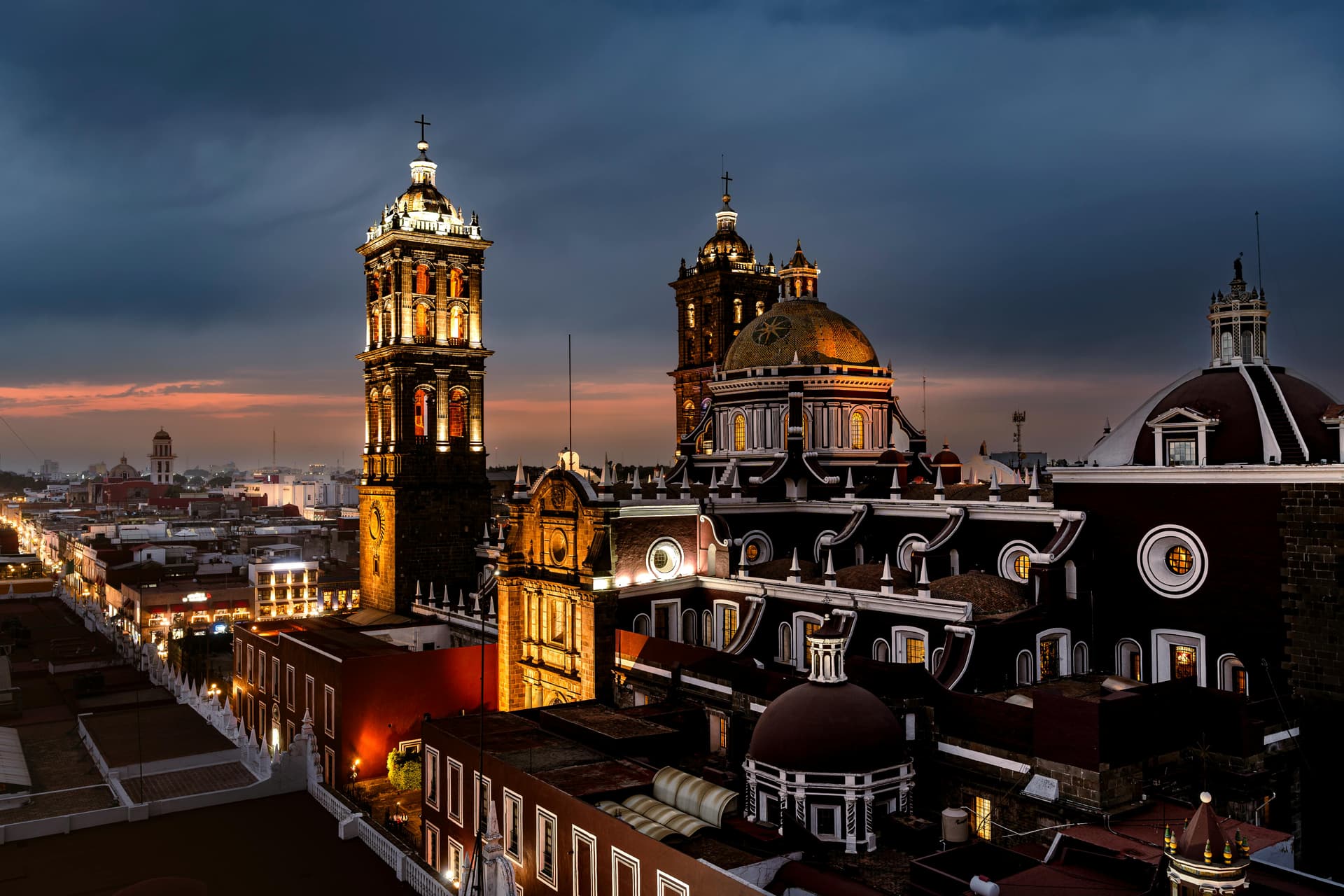
→ Catedral de Puebla — A massive cathedral on the south side of the Zócalo, blending baroque, Renaissance, and neoclassical styles. One of the largest and most ornate in Mexico.
→ Capilla del Rosario — Inside the Templo de Santo Domingo. An extraordinarily ornate baroque chapel covered entirely in gold leaf, stucco, and Talavera tile.
→ Biblioteca Palafoxiana—Founded in 1646, it is the oldest public library in the Americas. Over 45,000 volumes are on antique wooden shelves under a vaulted ceiling.
→ Callejón de los Sapos — An alley of antique shops, artisan crafts, and weekend markets. The center of Puebla's bohemian/artist scene.
→ Barrio del Artista — An artist quarter with open-air studios, galleries, and murals.
→ Calle de los Dulces (Candy Street) — Over 40 shops selling traditional Puebla sweets made from fruit, nuts, pine seeds, and sweet potato.
→ Talavera workshops — Puebla has been producing hand-painted Talavera ceramics for over 400 years. Workshops offer tours of the production process.
→ Cholula — A town directly adjacent to Puebla, home to the Great Pyramid of Cholula (the largest pyramid by volume in the world, mostly buried under a hill with a church on top — Iglesia de Nuestra Señora de los Remedios). It's about 15 minutes from Puebla centro. Underground tunnels are open for exploration beneath the pyramid.
→ Pasaje Histórico 5 de Mayo — Underground tunnels beneath the city commemorating the 1862 Battle of Puebla against the French army (the origin of the Cinco de Mayo holiday).
📍 Where to eat
→ Centro Histórico / Zócalo area — Traditional Puebla cuisine is one of the most important in Mexico. Mole poblano (the original mole—chocolate, chiles, nuts, and spices); chiles en nogada (seasonal, August–September—stuffed poblano pepper with walnut cream sauce and pomegranate); cemitas (Puebla's signature sandwich); tacos árabes (spit-roasted pork in pita-style bread, created by Lebanese immigrants); and chalupas.
→ Mercado El Parián — Crafts and food market since 1796. Talavera, textiles, and street food.
📍 Where to go out
→ Centro Histórico — Mezcalerías, pulquerías, cocktail bars, rooftop bars, and live music venues around the Zócalo and surrounding streets. Puebla has a university population that keeps the bar scene active.
→ Cholula — A strong nightlife of its own, driven by the large student population from local universities. Bars and clubs concentrated around the Cholula zócalo.
📍 Where to find culture
→ Biblioteca Palafoxiana — The oldest public library in the Americas.
→ Capilla del Rosario — Baroque gold-leaf chapel.
→ Museo Amparo — One of the best art museums in Mexico, with pre-Columbian, colonial, and contemporary collections in a beautifully restored colonial building.
→ Museo de la Revolución Mexicana — Housed in the Serdán family home, where the Mexican Revolution began in Puebla.
→ Talavera ceramics — A centuries-old craft tradition unique to Puebla.
→ Cinco de Mayo — The holiday originates from the Battle of Puebla (May 5, 1862). The Forts of Loreto and Guadalupe on the hill above the city mark the battlefield site.
📍 Nearby destinations
→ Cholula (15 min — Great Pyramid and church), CDMX (2 hrs), Tlaxcala (30 min), Volcán La Malinche (hiking)
📍 Climate by season
Puebla sits at a 2,160 m altitude with a temperate highland climate.
Dry season (October–May) — Highs around 22–28°C (72–82°F). Lows around 6–12°C (43–54°F). Sunny and dry. Cool mornings and evenings, especially November–February.
Rainy season (June–September) — Highs around 22–25°C (72–77°F). Lows around 10–14°C (50–57°F). Afternoon rains.
Chiles en nogada season — August and September. This is a significant culinary event—many restaurants serve the seasonal dish only during these months.
📍 Areas that may not be safe
Based on news reports and online sources, these are the areas that may not be safe:
Some outlying colonias and neighborhoods of Puebla city away from the centro histórico.
Highway corridors in the state, particularly toward Veracruz and Tlaxcala at night.
(Picture credit: Saúl Sigüenza)
Comments
0 commentsJoin the conversation and share your perspective.