Quintana Roo
OpenRoom put together a mini guide of things you might want to know before your trip to Quintana Roo! Nevertheless, don't forget to scroll down to the comments to see tips & tricks from travelers who've been there!
CANCÚN
📍 Where to find activities
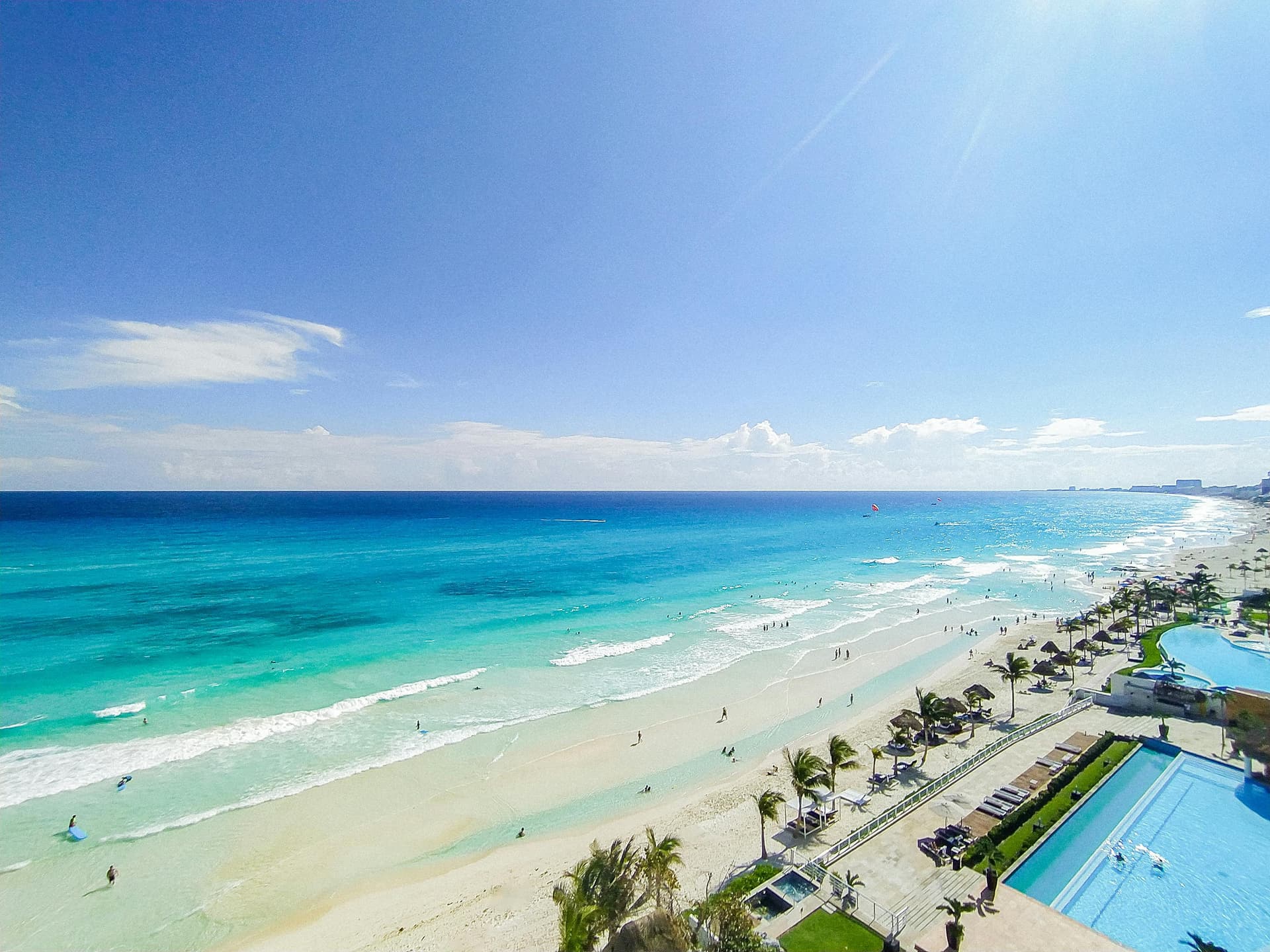
→ Zona Hotelera (Hotel Zone)—A 23 km strip of sand between the Caribbean Sea and Laguna Nichupté. Beaches, resorts, water sports, shopping malls, and the Museo Maya de Cancún.
→ Playa Delfines — The widest and most iconic public beach in Cancún. The famous Cancún sign for photos is here.
→ El Rey Archaeological Site — Small Mayan ruins right inside the Hotel Zone.
→ Laguna Nichupté — A protected lagoon behind the Hotel Zone with mangroves, kayaking, and wildlife.
→ Downtown (El Centro) — Parque de las Palapas, Mercado 28 for souvenirs, and Mercado 23 for local food.
→ Xcaret / Xel-Há / Xplor—Eco-adventure theme parks south of Cancún along the Riviera Maya.
📍 Where to eat
→ Zona Hotelera — Resort restaurants, international dining, and beachfront options along Boulevard Kukulcán.
→ Downtown (El Centro) — Local taquerías, seafood, and much cheaper prices than the Hotel Zone. Mercado 28 and the streets around Parque de las Palapas.
📍 Where to go out
→ Zona Hotelera Party Zone (Km 9–9.5) — Coco Bongo, The City, Mandala, La Vaquita, Congo Bar, and Señor Frog's. This is the main nightlife strip and one of the biggest party scenes in Latin America.
→ Downtown — More local and affordable bars around Parque de las Palapas.
📍 Where to find culture
→ Museo Maya de Cancún — The most comprehensive Maya museum in the region, with artifacts from Chichén Itzá, Palenque, and other sites. Includes access to the San Miguelito archaeological zone.
→ El Rey Ruins — Small but accessible Mayan site inside the Hotel Zone.
📍 Nearby destinations
→ Isla Mujeres (25-min ferry), Chichén Itzá (2.5 hrs), Valladolid (2 hrs), Holbox (3 hrs + ferry)
PLAYA DEL CARMEN
📍 Where to find activities
→ Quinta Avenida (5th Avenue)—The main pedestrian street. Shops, restaurants, bars, and beach access. Runs for dozens of blocks parallel to the coast.
→ Beaches — Playa Mamitas and the public beaches along the coast.
→ Cenotes — Dozens of cenotes (natural sinkholes with crystal-clear water) within a short drive. Some of the most famous in the Yucatán are near here.
📍 Where to eat
→ Quinta Avenida and surrounding streets—Everything from street tacos to international dining. The area between Calle 12 and Calle 40 has the highest concentration.
📍 Where to go out
→ Calle 12 / Quinta Avenida north—The nightlife strip. Clubs, rooftop bars, and live music. Coco Bongo also has a Playa location.
📍 Where to find culture
→ Xcaret: An eco-archaeological park combining nature, Mayan history, and cultural shows. Located just south of Playa.
→ Street art and galleries along Quinta Avenida and surrounding streets.
📍 Nearby destinations
→ Cozumel (45-min ferry), Tulum (1 hr), Cancún (1 hr), Cenotes (10–30 min drive in various directions)
TULUM
📍 Where to find activities
→ Tulum Archaeological Zone — Mayan ruins on a cliff overlooking the Caribbean Sea. One of the most photographed archaeological sites in Mexico.
→ Tulum Beach Road—The stretch of boutique hotels, beach clubs, and restaurants between the ruins and the Sian Ka'an Biosphere Reserve.
→ Cenotes: Gran Cenote, Cenote Dos Ojos, Cenote Calavera, and many more within a short drive.
→ Sian Ka'an Biosphere Reserve—UNESCO-protected nature reserve south of Tulum. Jungle, lagoons, and wildlife.
📍 Where to eat
→ Tulum Beach Road — Higher-end restaurants and beach clubs.
→ Tulum Pueblo (downtown) — More affordable and local. The actual town is about 3 km from the beach.
📍 Where to go out
→ Tulum Beach Road — Bohemian-electronic scene. Open-air clubs and jungle parties. Papaya Playa Project and Vagalume are among the most well-known venues.
📍 Where to find culture
→ Tulum Archaeological Zone—The main cultural attraction.
→ Sian Ka'an Biosphere Reserve—Nature and wildlife.
📍 Nearby destinations
→ Playa del Carmen (1 hr), Cobá ruins (45 min), Bacalar (2.5 hrs), Valladolid (1.5 hrs)
COZUMEL
📍 Where to find activities
→ Snorkeling and diving—Cozumel sits on part of the Mesoamerican Barrier Reef, the second-largest coral reef system in the world. World-class diving.
→ San Miguel Centro—The main town. Waterfront malecón, shops, restaurants, and dive shops.
→ Chankanaab National Park — Snorkeling, a botanical garden, and a sea lion show.
→ East Coast — Wild, undeveloped Atlantic side. Beach bars, raw surf, no resorts.
📍 Where to eat
→ San Miguel waterfront and downtown streets.
📍 Where to go out
→ San Miguel waterfront bars—Small-town nightlife. Beach bars and live music along the malecón. Not a mega-club scene.
📍 Where to find culture
→ San Gervasio Archaeological Site—The most important Mayan site on the island.
→ Museo de la Isla de Cozumel — History of the island from Mayan times to the present.
📍 Nearby destinations
→ Playa del Carmen (45-min ferry)
ISLA MUJERES
📍 Where to find activities
→ Playa Norte—Consistently ranked one of the best beaches in Mexico. Calm, shallow, turquoise water.
→ Punta Sur — Cliffside views, a sculpture garden, and the easternmost point of Mexico.
→ Snorkeling — MUSA (Underwater Museum of Art) and the reef around the island.
→ Golf cart exploration—The island is small enough to explore entirely by golf cart in a few hours.
📍 Where to eat
→ Centro — Colorful streets with seafood restaurants and casual eateries along Hidalgo Street.
📍 Where to go out
→ Centro / Hidalgo Street—Small island nightlife. Bars, live music, and Buho's beach bar. Laid-back, not a party destination.
📍 Where to find culture
→ Punta Sur sculpture garden and history of the island's connection to the Maya goddess Ixchel.
📍 Nearby destinations
→ Cancún (25-min ferry)
HOLBOX
📍 Where to find activities
→ Beaches — Wide, shallow beaches with soft sand. The island sits where the Gulf of Mexico meets the Caribbean.
→ Whale shark tours—Swim alongside whale sharks from June to September.
→ Bioluminescence — On certain nights, the water glows from plankton. Best seen on dark, moonless nights.
→ Isla Pájaros (Bird Island) — Boat trip to see flamingos, pelicans, and other tropical birds.
→ Punta Mosquito—A long, remote sandbar with stunning turquoise water.
📍 Where to eat
→ Centro—Sandy streets lined with seafood restaurants, taco stands, and casual eateries.
📍 Where to go out
→ Centro beach bars—Bonfires, DJ sets, mezcal. Bohemian and low-key. No clubs.
📍 Where to find culture
→ Street art and murals throughout the island. The culture here is more about slowing down than sightseeing.
📍 Nearby destinations
→ Cancún (3 hrs by road + ferry). Holbox is reached by ferry from the port of Chiquilá.
PUERTO MORELOS
📍 Where to find activities
→ Puerto Morelos Reef National Park — Protected section of the Mesoamerican Barrier Reef, close to shore. Great for snorkeling and diving.
→ Town Square—Small fishing village with a leaning lighthouse, local restaurants, and a cenote nearby.
📍 Where to eat
→ Town square and waterfront—Casual seafood and local food.
📍 Where to go out
→ Very limited nightlife. Puerto Morelos is a quiet fishing village.
📍 Where to find culture
→ The town itself is small, authentic, and unhurried compared to Cancún or Playa.
📍 Nearby destinations
→ Cancún (30 min), Playa del Carmen (30 min)
AKUMAL
📍 Where to find activities
→ Akumal Bay—Famous for sea turtle snorkeling directly from shore.
→ Half Moon Bay — Calmer water, snorkeling, and a more secluded feel.
📍 Where to eat
→ Akumal Pueblo — Small cluster of restaurants near the main entrance.
📍 Where to go out
→ Akumal has no nightlife. It is a day-trip or quiet-stay destination.
📍 Where to find culture
→ The experience here is nature-focused rather than cultural.
📍 Nearby destinations
→ Tulum (20 min), Playa del Carmen (30 min)
BACALAR
📍 Where to find activities
→ Laguna de los Siete Colores (Lagoon of Seven Colors)—The main attraction. A freshwater lagoon with shades of turquoise, blue, and green. Boat tours, kayaking, paddleboarding, and swimming.
→ Fuerte de San Felipe — Colonial fort in the town center, now a small museum.
→ Canal de los Piratas (Pirate Channel) — A narrow stretch of the lagoon with crystal-clear, shallow water. Popular swimming spot.
→ Los Rápidos—A natural channel with a gentle current that carries you along. Also a spot to see stromatolites—some of the oldest life forms on the planet.
→ Cenote Azul — A large, deep cenote near the lagoon.
📍 Where to eat
→ Town center — Restaurants along the lagoon and around the main plaza. More affordable than the rest of Quintana Roo.
📍 Where to go out
→ Bacalar has very limited nightlife. A few lagoon-side bars with live music and mezcal. This is not a party destination.
📍 Where to find culture
→ Fuerte de San Felipe — History of piracy and colonial conflict in the region.
→ Street art and murals throughout the town.
📍 Nearby destinations
→ Chetumal (40 min), Tulum (2.5 hrs). The Tren Maya now connects Bacalar to other destinations in the region.
CHETUMAL
📍 Where to find activities
→ Boulevard Bahía—Waterfront boulevard with bay views, restaurants, and modern hotels.
→ Museo de la Cultura Maya—Museum dedicated to Mayan civilization and history.
→ Zona Libre (Free Zone) — Duty-free shopping area on the border with Belize.
📍 Where to eat
→ Downtown and Boulevard Bahía—Local restaurants and seafood.
📍 Where to go out
→ Chetumal has limited nightlife. It is primarily a transit hub and state capital.
📍 Where to find culture
→ Museo de la Cultura Maya—The main cultural attraction.
→ The city serves as a gateway to Belize and to the Mayan ruins of Kohunlich and Dzibanché.
📍 Nearby destinations
→ Bacalar (40 min), Belize border crossing (10 min), Mahahual/Costa Maya (2 hrs)
📍 Climate by season (applies to all of Quintana Roo)
Dry season (November–April)—Highs around 28–31°C (82–88°F). Lows around 19–23°C (66–73°F). Mostly sunny with occasional cool and windy days from December to February when northern fronts ("Nortes") blow through. The driest months are March and April.
Rainy season (May–October)—Highs around 30–33°C (86–91°F). Lows around 24–26°C (75–79°F). Hot and humid. Afternoon rain showers are common but usually short. Hurricane season runs from June to November, with the highest risk from August to October.
Year-round—Tropical climate. Warm and humid throughout the year. The sea is warm enough to swim in every month (26–29°C / 79–84°F). Sargassum seaweed can affect Caribbean beaches, particularly between April and August—it varies year to year and beach to beach.
📍 Areas that may not be safe
Based on news reports and online sources, these are the areas that may not be safe:
Cancún—Residential neighborhoods away from the Hotel Zone (Bonfil, Tres Reyes, Santa Cecilia, Valle Verde). Downtown after midnight in poorly lit areas.
Playa del Carmen — Downtown areas after dark, away from Quinta Avenida.
Tulum—The beach road at night is darker and more isolated than Cancún or Playa. Downtown Tulum Pueblo after dark.
(Picture credit: Tellez Erik)
Comments
0 commentsJoin the conversation and share your perspective.