San Luis Potosí

OpenRoom put together a mini guide of things you might want to know before your trip to San Luis Potosí! Nevertheless, don't forget to scroll down to the comments to see tips & tricks from travelers who've been there!
REAL DE CATORCE
📍 Where to find activities
→ Túnel de Ogarrio — The only vehicular access to the town. A 2.3 km single-lane tunnel was carved through the mountain in the late 19th century. Vehicles alternate directions. The tunnel is the first experience of Real de Catorce—dark, narrow, and dramatic.
→ Pueblo Fantasma (Ghost Town) — The abandoned ruins of the mining district above the town. Old mine structures, collapsed buildings, and silent streets from Real de Catorce's silver boom era (late 1800s). Reachable by foot (1 hr walk) or horseback tour.
→ Willys Jeep tours — Old A Willys Jeep rides through the desert and mountains surrounding the town. The most popular activity. Routes pass abandoned haciendas, the old train station, and desert landscapes.
→ Cerro del Quemado — A sacred mountain for the Wixárika (Huichol) people, who make pilgrimages here as part of their spiritual traditions. A hiking trail leads to the top with views of the surrounding desert.
→ Horseback riding — Guided rides through the desert and up to the mining ruins.
→ Plaza Hidalgo and Parroquia de la Purísima Concepción — The main square and parish church, a pilgrimage site for devotees of San Francisco de Asís ("Panchito"). The church is the spiritual center of the town.
📍 Where to eat
→ Around Plaza Hidalgo — A handful of restaurants and cafés. The town is small (under 1,000 residents), so options are limited. Traditional food with a desert/ranch character.
📍 Where to go out
→ Real de Catorce has no nightlife. It is an extremely quiet, remote mountain town. The experience here is about the desert, the silence, and the stars.
📍 Where to find culture
→ Casa de Moneda (Museum) — The former mint, now a museum with exhibits on mining history, the Huichol/Wixárika culture, and peyote.
→ Palenque de Gallos — A restored cockfighting ring from the mining era.
→ The Wixárika (Huichol) presence—Real de Catorce is at the edge of Wirikuta, a sacred territory for the Wixárika people. Their pilgrimages, colorful beadwork, and spiritual traditions are part of the fabric of this place.
📍 Nearby destinations
→ Matehuala (1.5 hrs—the nearest town with services and bus connections), San Luis Potosí city (4–5 hrs)
HUASTECA POTOSINA (Tamasopo / Ciudad Valles / Xilitla)
📍 Where to find activities
→ Cascadas de Tamasopo — Three natural waterfalls with swimming pools, rope swings, jumping platforms, and lifeguards. Developed like a natural waterpark. One of the most accessible attractions in the Huasteca.
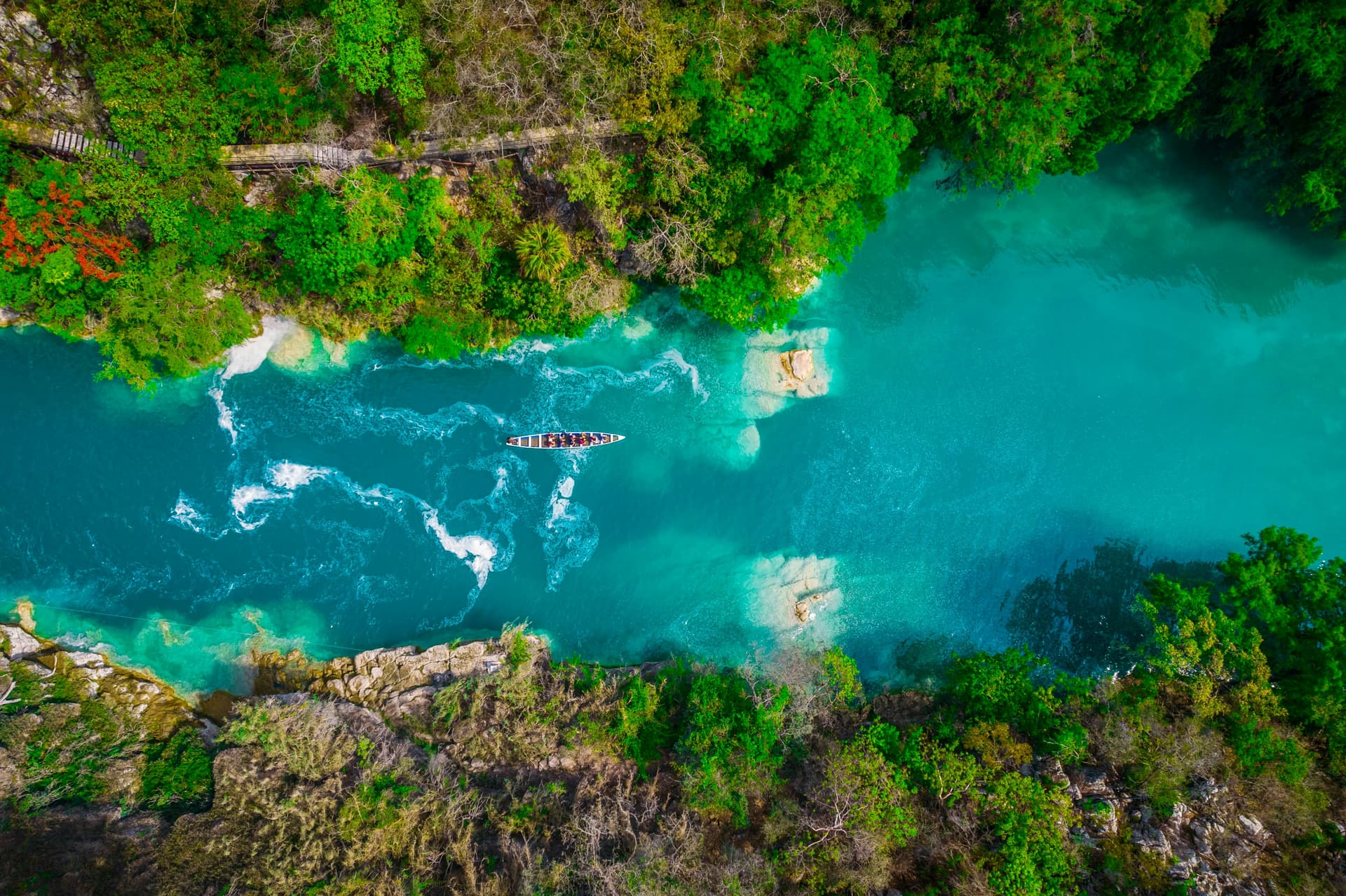
→ Puente de Dios — A natural rock bridge formation over turquoise water, about 15 minutes from Tamasopo. Swimming in underground caves and pools.
→ Cascada de Tamul — The most spectacular waterfall in the Huasteca. A 105-meter drop of milky-blue water into a canyon. Reachable by kayak or canoe tour down the Río Tampaón (about 4 hrs round trip).
→ Cascadas de Micos — A series of seven small waterfalls along the Micos River near Ciudad Valles. Zip-lining, sky biking, canoeing, and waterfall jumping.
→ Cascada de Minas Viejas — Two waterfalls dropping 50+ meters into an enormous blue pool. One of the most visually stunning waterfalls in Mexico.
→ Sótano de las Golondrinas — A massive vertical cave pit (over 300 meters deep) where thousands of swifts fly out at dawn in a spiraling column. A natural spectacle.
→ Jardín Surrealista de Edward James (Las Pozas, Xilitla) — A surrealist sculpture garden built in the jungle by British artist Edward James between the 1960s and 1980s. Concrete structures, staircases to nowhere, and jungle-covered art.
→ Rafting and kayaking — The rivers of the Huasteca offer options from calm floating to whitewater.
📍 Where to eat
→ Ciudad Valles — The main town and most common base. Restaurants and street food in the center.
→ Tamasopo and Xilitla — Small restaurants and food stalls near the main attractions. Seafood from the rivers, traditional Huasteca food.
📍 Where to go out
→ The Huasteca Potosina has no nightlife. This is a nature and adventure destination. Ciudad Valles has a few bars but nothing significant.
📍 Where to find culture
→ Jardín Surrealista de Edward James — The surrealist garden in Xilitla is one of the most unique art installations in Mexico.
→ Indigenous Teenek and Nahuatl communities—Several communities in the Huasteca still speak indigenous languages and maintain traditional practices.
📍 Nearby destinations
→ Tamasopo to Ciudad Valles (1 hr), Xilitla (2 hrs from Ciudad Valles), and San Luis Potosí city (4 hrs from Ciudad Valles)
📍 Climate by season
San Luis Potosí has two very different climates depending on the region:
Real de Catorce (desert, 2,750m altitude):
Dry season (October–May) — Highs around 18–24°C (64–75°F). Lows around 2–8°C (36–46°F). Cold at night, especially December–February. Clear skies and intense sun during the day.
Rainy season (June–September) — Highs around 20–25°C (68–77°F). Lows around 8–12°C (46–54°F). Afternoon rains. Cooler and greener.
Huasteca Potosina (tropical, low altitude):
Dry season (November–April) — Highs around 26–32°C (79–90°F). Lows around 14–20°C (57–68°F). The best time to visit is when waterfalls flow well but rivers are clear and blue.
Rainy season (May–October) — Highs around 30–36°C (86–97°F). Lows around 20–24°C (68–75°F). Hot, humid, and rainy. Rivers can turn murky and brown. Some waterfalls are at their most powerful. Flash flooding is possible.
📍 Areas that may not be safe
Based on news reports and online sources, these are the areas that may not be safe:
Ciudad Valles — there are some reported crime incidents.
Matehuala — reports of violence and disappearances, particularly on routes heading north.
Highways in the Huasteca and Altiplano regions — particularly rural stretches and at night.
Municipalities bordering Zacatecas and Tamaulipas.
(Picture credit: Balam De la Rosa)
Comments
0 commentsJoin the conversation and share your perspective.